Rhystic Study MTG Card Guide: Do You Pay the One?
Prices from cards tracked on RareWell — updated daily. Last updated September 23, 2026. Format legality changes — verify against the current official banned & restricted list.
Rhystic Study is a three-mana blue enchantment that lets you draw a card whenever an opponent casts a spell unless that player pays one extra mana. In multiplayer Commander, three opponents casting spells turn that small tax into a steady stream of cards and the familiar question: “Do you pay the one?”
Rhystic Study began as an unassuming common in Prophecy, a set remembered more for its weaknesses than its power. Commander transformed the card. A trigger that might be manageable against one opponent becomes relentless when three opponents are each casting spells.
The result is one of the format’s signature engines: not a hard lock, not guaranteed card draw, but a constant choice that taxes opponents’ mana or rewards the controller with cards.
How Rhystic Study works
Whenever an opponent casts a spell, Rhystic Study triggers. When the trigger resolves, that player may pay one generic mana. If the player does not, Rhystic Study’s controller draws a card.
The opponent makes the choice as the trigger resolves, not when the spell is first announced. Paying the one does not counter the spell or add to its casting cost. It is a separate optional payment created by the triggered ability.
Each spell creates its own trigger. A player casting three spells may face three separate payments. Multiple Rhystic Studies can also create multiple triggers.
Why it is better in multiplayer
Rhystic Study scales with the number of opponents. In a one-on-one game, only one player feeds it. In a four-player Commander game, three players may each cast several spells before the Study player takes another turn.
Even when opponents pay, the enchantment has done work. Mana spent on the tax is mana not used to advance the board. When opponents stop paying, the controller draws deeper into interaction, land drops, and win conditions.
The card also benefits from ordinary human behavior. Players may intend to pay every time, then encounter a turn where using all available mana matters more than denying one card. Across a long game, those exceptions add up.
Commander players often mention it in the same breath as other tax-and-draw engines such as Mystic Remora, Smothering Tithe, and Esper Sentinel, or heavier draw payoffs like Consecrated Sphinx.
“Do you pay the one?” and table etiquette
Rhystic Study’s trigger is mandatory for its controller to track, but the payment is optional for the opponent. In casual play, the cleanest habit is to announce the trigger clearly and promptly without turning every spell into a speech.
The famous phrase became part of Commander culture because the card asks the same question repeatedly. Good physical tracking helps: place a die or marker on the enchantment, keep it visible, and avoid remembering several missed triggers after the game has moved on.
Which Rhystic Study printing should you buy?
The cheapest version changes with reprints and market conditions, so check the live printings table for current numbers. Readers should compare nonfoil copies in similar condition rather than assuming the newest version is always cheapest.
Collector value tends to separate into categories:
For a deck copy, prioritize readability, condition, and price. For a collection, the original printing and distinctive premium versions tell a stronger story.
- Original Prophecy copies
- Original Prophecy foils
- Standard reprints intended for play
- Alternate-art or borderless versions
- Premium foils and special treatments
- Universes Beyond or themed artwork
Why a common became valuable
Rhystic Study demonstrates that printed rarity does not determine long-term value by itself. The original card was common, but demand grew dramatically through Commander. Original foils came from an era when foil supply was low. Reprints expanded supply but also introduced new art and treatments that created additional collector markets.
It is the collision of play demand, nostalgia, printing scarcity, and version preference that creates the modern Rhystic Study market.
Rhystic Study printings tracked on RareWell
| Card | Set | Rarity | Price |
|---|---|---|---|
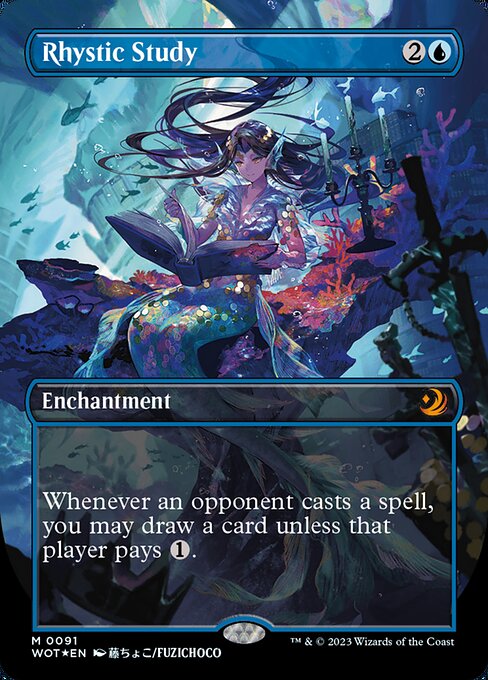
| Rhystic Study | Wilds of Eldraine: Enchanting Tales | mythic | $1,423 |
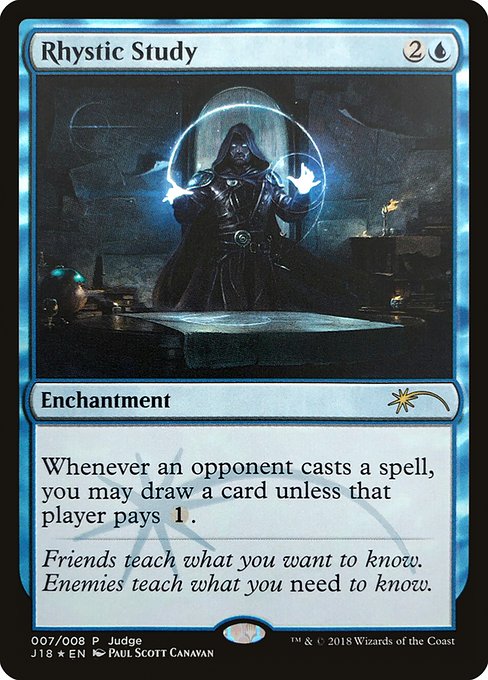 Rhystic Study Rhystic Study | Judge Gift Cards 2018 | rare | $283 |
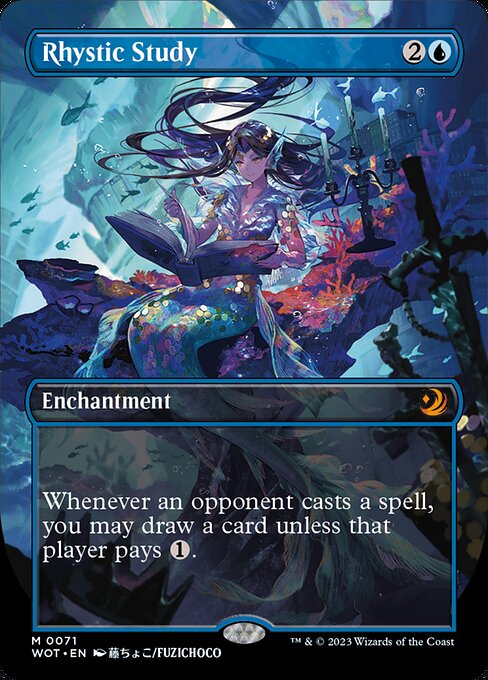 Rhystic Study Rhystic Study | Wilds of Eldraine: Enchanting Tales | mythic | $165 |
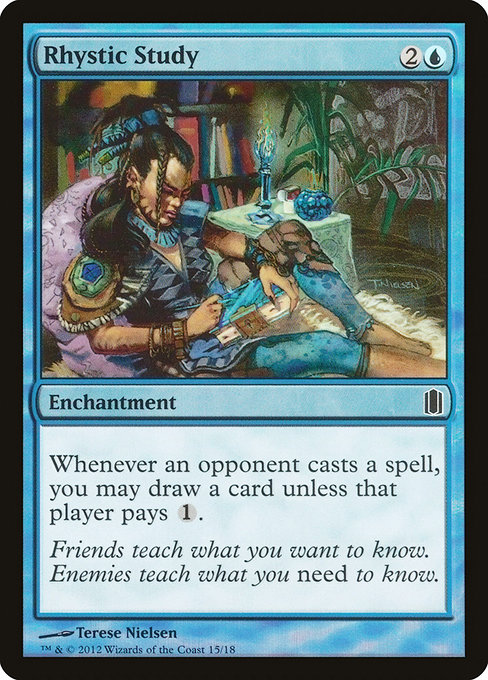 Rhystic Study Rhystic Study | Commander's Arsenal | common | $120 |
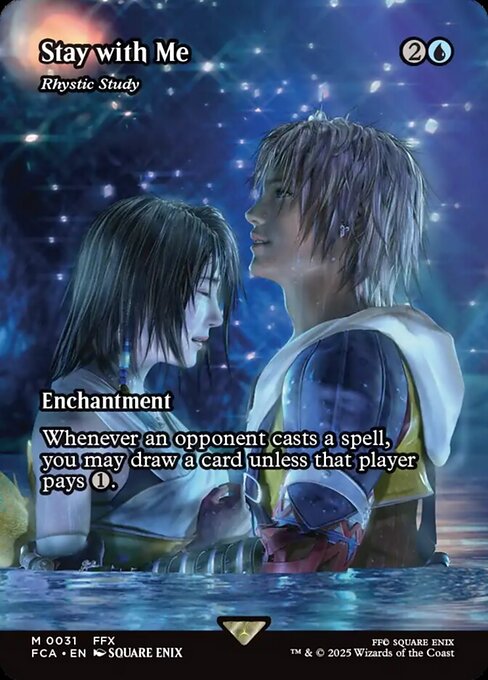 Rhystic Study Rhystic Study | Final Fantasy: Through the Ages | mythic | $109 |
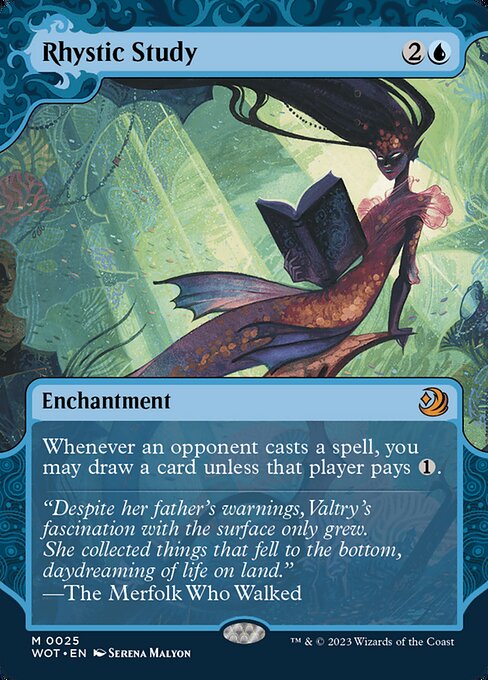 Rhystic Study Rhystic Study | Wilds of Eldraine: Enchanting Tales | mythic | $85 |
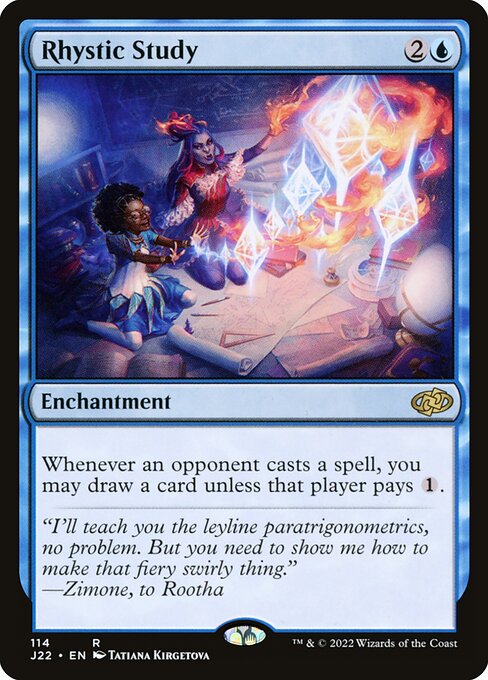 Rhystic Study Rhystic Study | Jumpstart 2022 | rare | $71 |
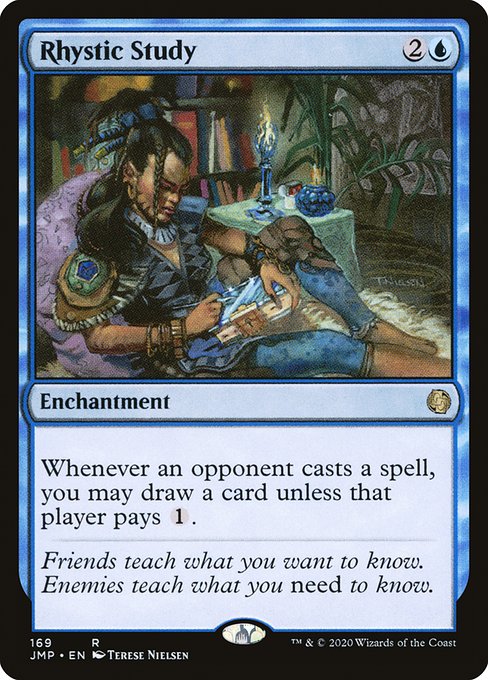 Rhystic Study Rhystic Study | Jumpstart | rare | $71 |
Collections featuring Rhystic Study
1 public collector has this card on RareWell — tap through to see it in their collection.
Frequently asked questions
- Do I have to pay one extra mana to cast a spell under Rhystic Study?
- No. You cast the spell normally. A separate trigger then gives you the option to pay one mana to stop the Study player from drawing.
- Does Rhystic Study trigger on itself?
- No. It triggers when an opponent casts a spell, and it is not on the battlefield yet while it is being cast.
- Does playing a land trigger Rhystic Study?
- No. Playing a land is not casting a spell.
- Why is Rhystic Study so good in Commander?
- It can trigger on every spell cast by three opponents, producing cards or taxing mana throughout the game.
- What is the cheapest Rhystic Study printing?
- Use the live RareWell printings table, filtered to comparable nonfoil conditions. The cheapest version changes as new printings enter the market.