The Most Valuable Common Magic Cards
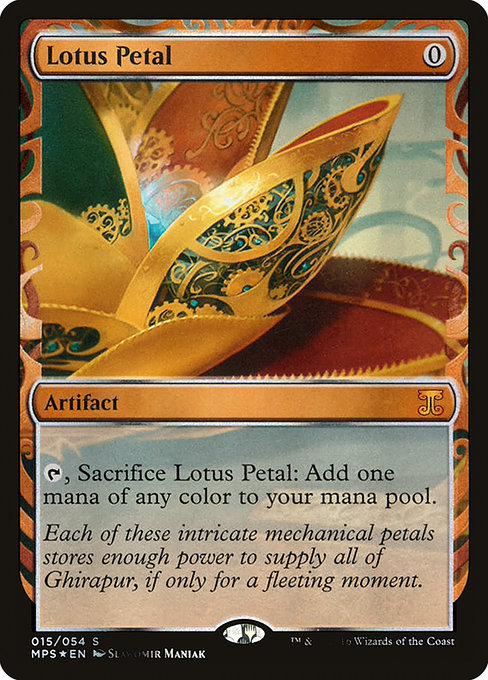
The most valuable common Magic cards are old-frame staples like Alpha Lightning Bolt, Tempest's Lotus Petal, and eternal-format workhorses such as Hymn to Tourach, Daze, and foil Brainstorm — commons that routinely outprice rares from their own sets.
The rarity symbol tells you how often a card appeared in a booster, not what it is worth. Value comes from demand meeting supply, and for older sets the supply of any card — common or not — can be tiny by modern standards.
Alpha and Beta commons: rarity by print run
In 1993, Lightning Bolt, Dark Ritual, and Sinkhole were all printed at common. It did not matter — the Alpha and Beta print runs were so small that every card from those sets is scarce today, and the iconic commons carry serious price tags, especially in clean condition.
This is the first lesson of valuable commons: for the earliest sets, the print run is the rarity. An Alpha common can be harder to find than a rare from a set printed five years later.
Eternal staples that happen to be commons
Legacy, Vintage, Commander, and Pauper generate constant demand for certain commons, and when the original printing is decades old, prices follow. These are the commons most likely to be hiding in an unsorted bulk box.
- Lotus Petal — Tempest common, free mana that echoes Black Lotus
- Daze — Nemesis common, a Legacy counterspell staple for decades
- Gush — Mercadian Masques common with a long combo pedigree
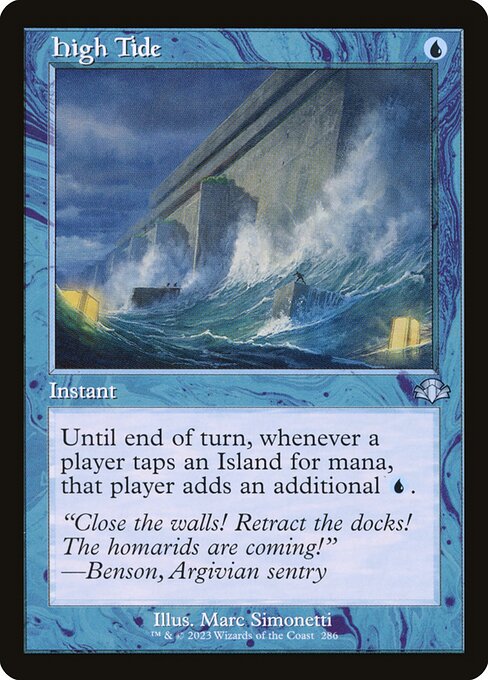
- Hymn to Tourach and High Tide — Fallen Empires commons, each with multiple artworks
- Rancor — Urza's Legacy common that never stopped seeing play
- Chain Lightning — Legends common riding Lightning Bolt's coattails
- Brainstorm — Ice Age common and arguably the most-played blue card in Legacy history
Foil commons: where the real money hides
Premium foils only entered boosters with Urza's Legacy in 1999, and early foiling was sparse. A common in foil from the Masques era can be dramatically scarcer than the same card's rare-slot neighbors.
Foil Brainstorm from Mercadian Masques is the famous example — an old-frame foil of a format-defining staple, printed when foils were new and pull rates were low. Foil Daze and other early-foil commons follow the same logic: playability plus genuine scarcity, with the rarity symbol completely irrelevant.
Why rarity symbols mislead on older cards
Rarity color-coding on the expansion symbol only began with Exodus in 1998. Every set before that used a plain black symbol regardless of rarity, so you cannot tell a common from a rare by looking at an older card — you have to know the set.
Older sets also had quirks like variant artworks and uneven print sheets, which means two copies of the same common can differ in scarcity. When you sort old bulk, check the set and the printing before the rarity — that is where valuable commons get missed.
Cards mentioned in this guide
Frequently asked questions
- Can a common Magic card be worth more than a rare?
- Yes, routinely. An Alpha Lightning Bolt or a foil Mercadian Masques Brainstorm outprices the vast majority of rares ever printed. Demand and true scarcity set the price, not the rarity symbol.
- How do I tell the rarity of an old Magic card?
- For sets before Exodus (1998) you cannot tell from the card itself — expansion symbols were all black. Look the card up by set and collector number in a database or collection tracker.
- Are foil commons worth money?
- Early ones often are. Foils from 1999 through the early 2000s were pulled at low rates, so a playable common in old-frame foil can be worth many times its non-foil version.