Magic Card Nicknames Glossary: Bolt, Goyf, Duals and More
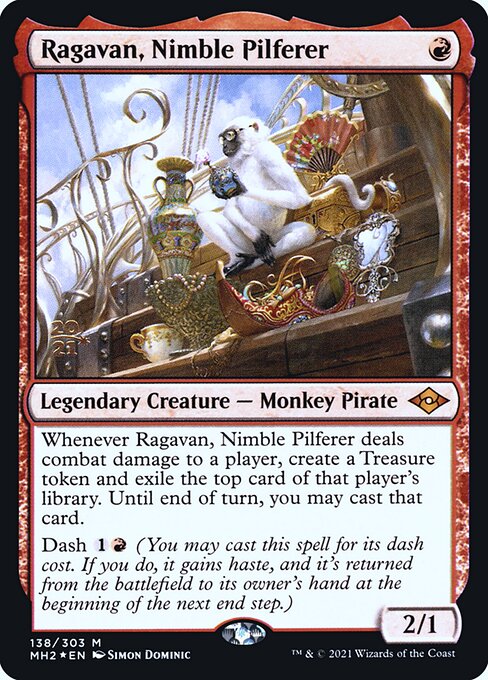
Magic card nicknames are the shorthand players and collectors use constantly: 'Bolt' is Lightning Bolt, 'Goyf' is Tarmogoyf, 'the monkey' is Ragavan, 'duals' are the original Alpha-through-Revised dual lands, and 'EDH' is just the older name for Commander.
If you're getting back into the hobby or reading trade discussions for the first time, the slang can feel like a second language. This glossary covers the terms you'll actually encounter.
Card nicknames every collector should know
Some cards are so ubiquitous their real names barely get used. The classics:
- Bolt — Lightning Bolt. Also a verb ('I'll Bolt it') and a benchmark ('does it die to Bolt?')
- Goyf — Tarmogoyf, the Future Sight creature that defined Modern for a decade
- Rags / the monkey — Ragavan, Nimble Pilferer from Modern Horizons 2
- Bob — Dark Confidant, nicknamed for Bob Maher, the Invitational winner whose prize was designing the card (his likeness is in the art)
- Tim — Prodigal Sorcerer, named after Tim the Enchanter from Monty Python; 'a Tim' now means any tap-to-ping creature
- Sad Robot — Solemn Simulacrum, for its mournful artwork
- Mom — Mother of Runes
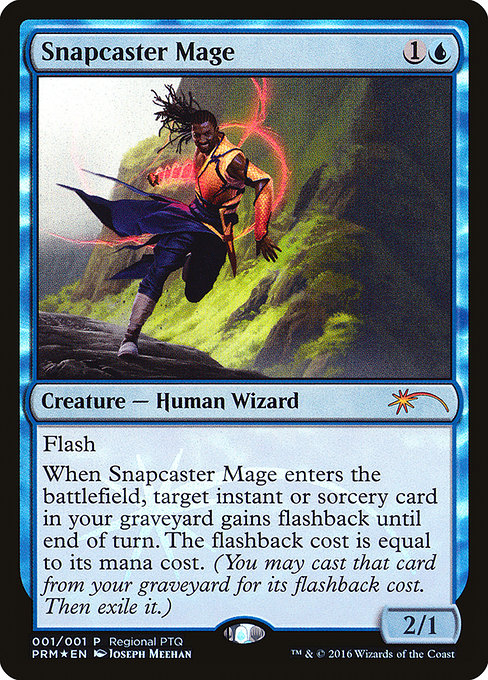
- Snappy — Snapcaster Mage
- Hoof — Craterhoof Behemoth, the classic green Commander finisher
Land slang: duals, shocks, fetches and friends
Land cycles get nicknamed faster than anything else because players discuss them constantly. 'Duals' means specifically the ten original dual lands from Alpha through Revised — Reserved List cards and the gold standard of mana. 'Shocks' are the Ravnica-block versions that deal you 2 damage to enter untapped. 'Fetches' are the fetch lands from Onslaught and Zendikar that sacrifice to search out other lands — 'cracking a fetch' is the act of using one.
Deeper in: 'checks' (check lands), 'pains' (pain lands), 'fasts' (fast lands), and 'triomes' (the three-color Ikoria cycle, now a generic term for tri-lands). When someone says a deck 'runs duals, fetches, and shocks,' they've described a top-tier mana base in six words.
Timmy, Johnny, and Spike
These aren't cards — they're player types, coined by Magic's head designer Mark Rosewater to describe why people play. Timmy wants big, splashy moments: huge dragons, giant X spells, dramatic swings. Johnny wants self-expression: weird combos, janky engines, decks nobody else would build. Spike wants to win: efficiency, tuned lists, tournament results.
Rosewater later added Vorthos (plays for story and flavor) and Mel (appreciates elegant mechanics). Most players are a blend, and the labels show up constantly in deckbuilding discussions — 'that's a very Johnny card' is a complete sentence to anyone who's been around.
Format and table slang
'EDH' stands for Elder Dragon Highlander — the fan-created name for what became Commander when Wizards adopted the format officially in 2011. Longtime players still say EDH; both terms mean exactly the same format. 'cEDH' is competitive Commander, the tuned, win-at-all-costs end of the spectrum.
Other table talk you'll hear: 'jank' (endearingly bad cards or decks), 'spicy' (an unexpected, clever inclusion), 'chase card' (the most desirable pull in a set), 'pet card' (a card someone plays out of love, not power), 'top-deck' (drawing exactly what you needed), and 'on curve' (playing a spell the turn its cost allows). None of it is official terminology; all of it is universal.
Cards mentioned in this guide
Frequently asked questions
- Why is Dark Confidant called Bob?
- Pro player Bob Maher won the Magic Invitational, and his prize was designing a card with his likeness in the art — that card became Dark Confidant. The community has called it Bob ever since.
- What does EDH stand for in Magic?
- Elder Dragon Highlander — the original fan name for the format Wizards officially adopted as Commander in 2011. EDH and Commander refer to the same format.
- What are fetch lands in MTG?
- Lands that sacrifice themselves to search your library for other lands, from cycles in Onslaught and Zendikar. Players call using one 'cracking a fetch.'
- What does 'dies to Bolt' mean?
- It asks whether a creature has 3 or less toughness and can be killed by Lightning Bolt for one mana. It's shorthand for evaluating how fragile a creature is against cheap removal.